UNCP students work alongside healthcare professionals to understand workforce, access challenges facing rural communities
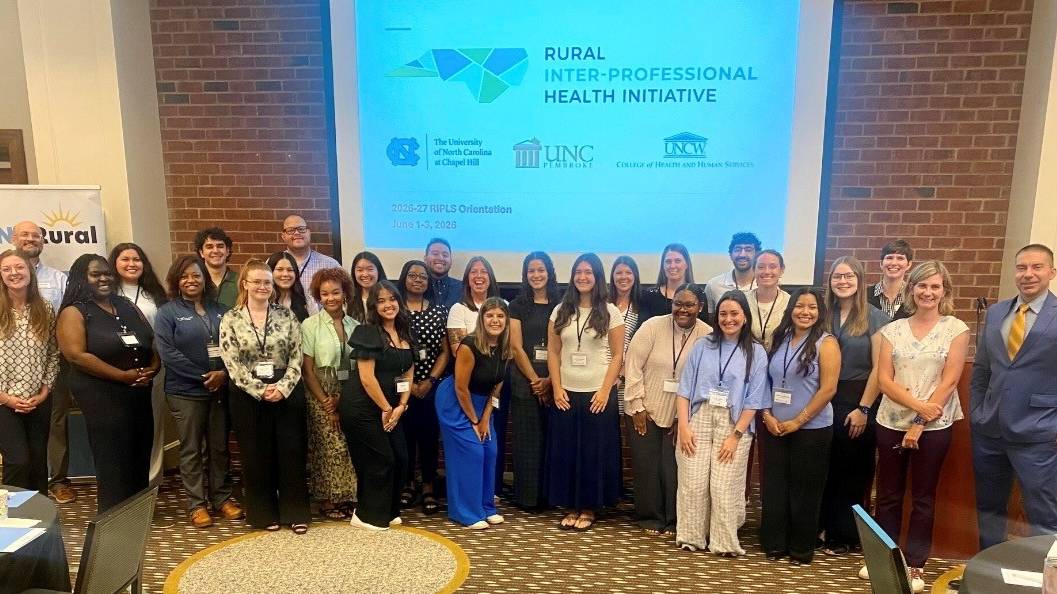
Youssef Houissa spent part of his summer trying to answer a question facing rural hospitals across North Carolina: How do you attract the healthcare professionals a community needs?
The UNC Pembroke senior wasn’t tackling the question for a class. Working with a team at Novant Health, he analyzed hiring trends, studied how long positions remained vacant and helped the health system better understand its recruitment challenges.
“We were almost acting as consultants,” said Houissa, who is majoring in social work. “It was super cool to be trusted to do that type of research and have it paid attention to.”
Houissa was one of eight UNCP students who spent seven weeks working alongside students from other health disciplines and professionals in rural healthcare settings through the Rural Interprofessional Longitudinal Scholars (RIPLS) Program.
Supported by the Kenan Charitable Trust, RIPLS brought together health professions students from UNCP, UNC-Chapel Hill and UNC Wilmington for a summer immersion experience with healthcare partners, including UNC Health Southeastern and Novant Health. The program is designed to prepare future health professionals to work collaboratively and to expose them to the distinct challenges facing rural communities.
For Houissa, the experience went beyond learning about the challenges of recruiting healthcare professionals. It changed the direction he sees for his own career. He originally planned to pursue a master’s degree in social work but now intends to pursue a master’s in healthcare administration and a career in hospital quality improvement.
“The immersion experience opened my eyes to who plays what role when it comes to solving problems at a system level,” he said.
The challenges Houissa encountered are playing out across North Carolina. The state is home to more than 4.6 million rural residents — the second-largest rural population in the nation — and 91 of its 100 counties face shortages in primary care, dental or behavioral healthcare, according to the N.C. Department of Health and Human Services. Rural residents also experience nearly twice as much difficulty accessing healthcare services as their urban counterparts.
Senior kinesiology major Nyiah Long witnessed those challenges from a different perspective.
Long, who plans to graduate in spring 2027, accompanied a Novant Health community health worker and paramedic on a home visit. The experience showed her the important role community health workers can play in connecting patients with healthcare services and resources.
She also gained a deeper understanding of barriers that can make accessing care more difficult in rural communities, including limited internet connectivity and a lack of familiarity with digital health resources among some older residents.
Long said those experiences reinforced a central lesson of the program: caring for a patient rarely falls to a single health professional.
“There is not just one person who gets the person the health they need; it’s the whole team,” she said. “If you are not willing to work collaboratively, then you are doing a disservice to your client.”
That emphasis on collaboration is at the heart of RIPLS. UNCP’s eight participating students represented kinesiology, social work and occupational therapy, giving them opportunities to learn how different disciplines approach healthcare while working toward common solutions.
“In healthcare delivery, you must work with others. You must cross disciplinary lines. Interprofessional collaboration is key,” said Dr. Ash Walker, assistant professor of kinesiology at UNCP.
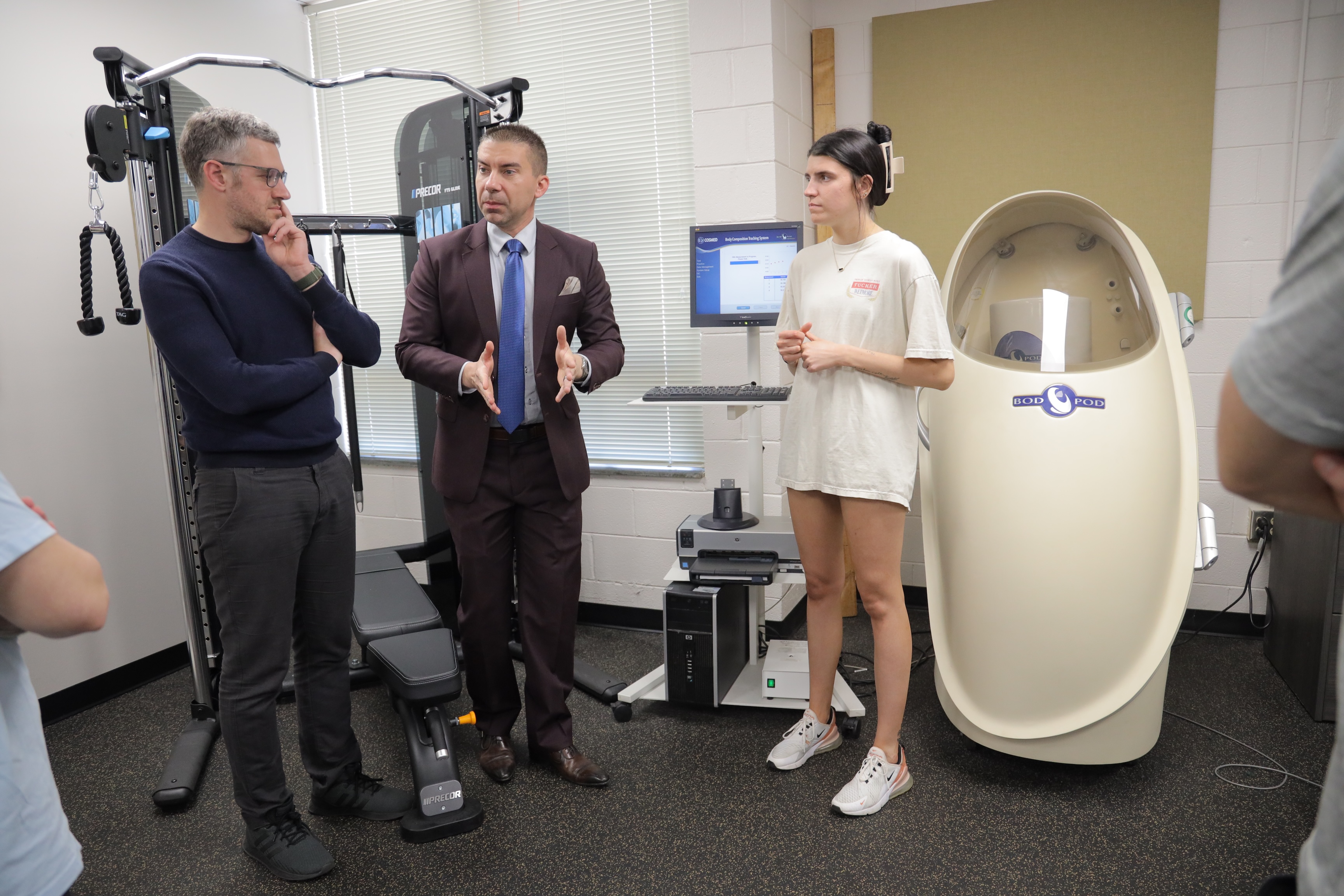
Walker said placing students in rural healthcare settings also gives them a firsthand understanding of challenges they may not encounter in a classroom and an opportunity to work directly with healthcare leaders and community partners.
Long said the experience also challenged her personally. Naturally quiet, she initially worried about finding her place within an interdisciplinary group.
“That was a big obstacle for me — learning to be social,” she said. “I was scared that I wasn’t going to add anything to the conversation or bring anything to the program, but that wasn’t the case.”
Dr. Eva Skuka, dean of the College of Health Sciences, said experiences like RIPLS are increasingly important as UNCP prepares students to enter a healthcare workforce that depends on professionals working across disciplines.
“RIPLS demonstrates that preparing the rural healthcare workforce requires us to rethink how we educate our students,” Skuka said. “Interprofessional education, immersive community experiences and close partnerships with local healthcare systems allow students to learn not only from their disciplines, but from one another and from the communities they will serve.”
The summer immersion is only one part of the larger program. RIPLS scholars will continue meeting twice a month virtually throughout the fall and spring semesters, hearing from guest speakers and exploring issues affecting rural healthcare.
Walker said the program also provides an opportunity to strengthen UNCP’s relationships with regional healthcare partners and build a pipeline of professionals prepared to serve southeastern North Carolina.
That work reflects a broader role for UNCP as a rural-serving university. This year, Washington Monthly recognized UNCP in its inaugural Best Colleges for Rural America rankings, which consider how institutions serve rural students and communities, including their contributions to rural workforce needs.
“With the College of Health Sciences here, I think it better solidifies the partnership we have with our community partners,” Walker said. “We want to produce our own healthcare professionals.”
For Skuka, the first cohort demonstrates how those partnerships can connect students’ education directly to the region’s needs.
“As our first cohort completes the program, we are seeing the power of this model to prepare graduates who are collaborative, culturally responsive and deeply connected to the health needs of rural southeastern North Carolina,” she said. “This is more than an academic initiative — it is an investment in a stronger healthcare workforce and healthier communities across our region.”
Houissa came away from the experience with that same sense of purpose.
“This program made us understand we are actively a part of the future of healthcare,” he said.