UNC Pembroke Earns State Building Commission Merit Award
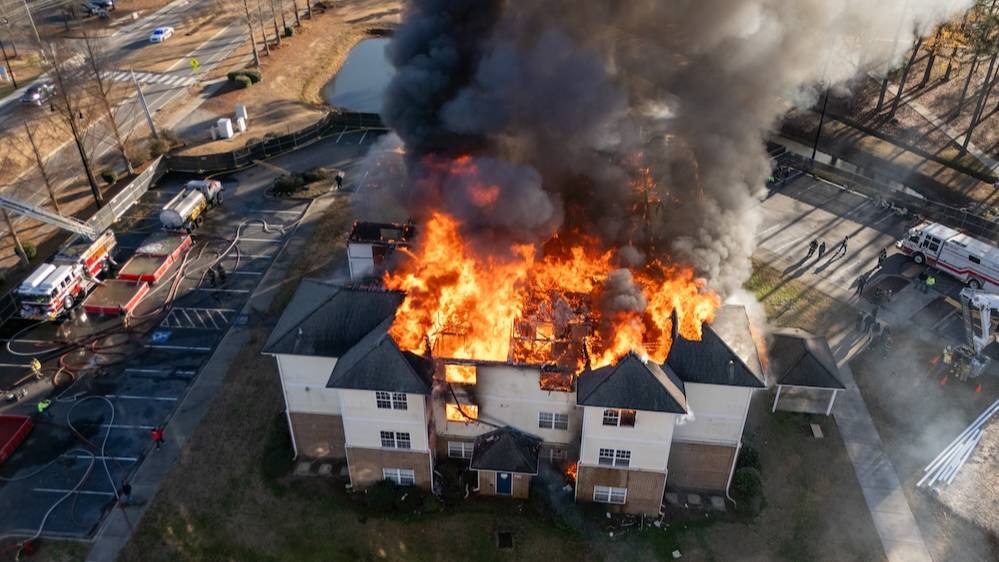
The University of North Carolina Pembroke has been awarded the State Building Commission Merit Award for Excellence in Project Implementation for its innovative Village Apartments demolition project, a first-of-its-kind initiative in North Carolina that combined cost savings, public safety training and strategic campus development.
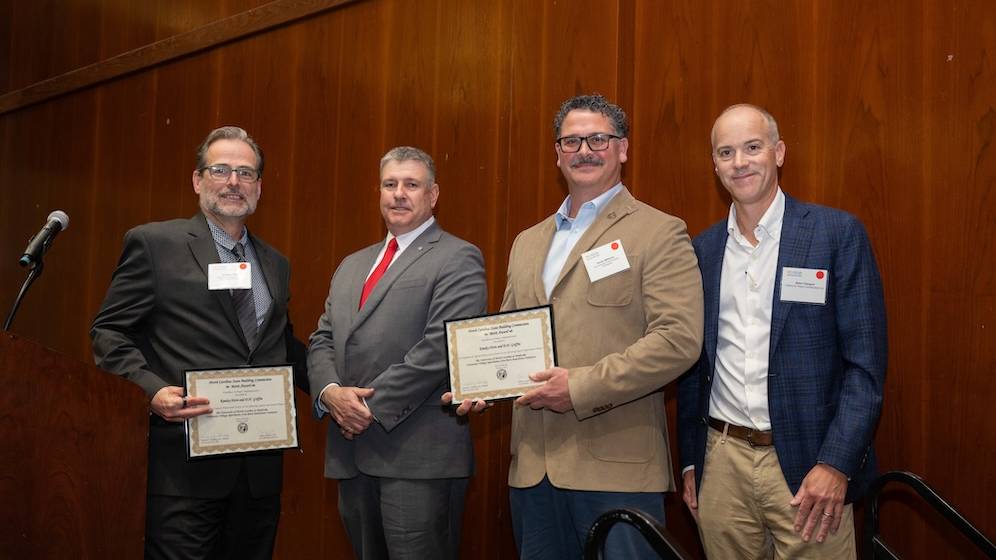
The award, presented during the 45th annual State Construction Conference, recognizes outstanding achievement in project design, construction and overall implementation across the state.
Kevin Witmore, senior project manager, and Douglas Hall, interim architect, accepted the award at a luncheon on March 5 at the McKimmon Conference and Training Center in Raleigh.
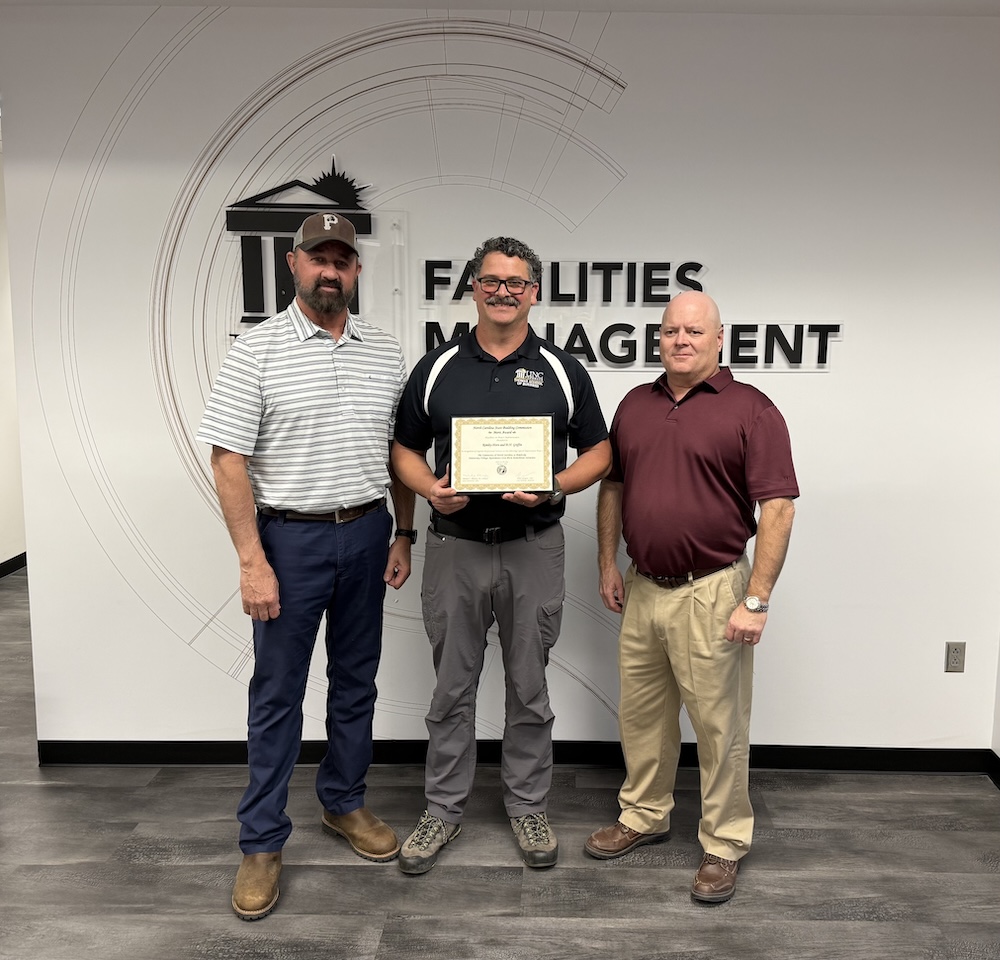
“This project was unique, and to our knowledge, it had never been done before on a state university campus in North Carolina,” said Victor Deese, assistant vice chancellor for Facilities. “It highlights the level of collaboration between the university, local and state agencies, community partners and emergency responders.”
Between December 21, 2024, and January 5, 2025, UNCP conducted a series of controlled burns on six vacant Village Apartments buildings. Rather than pursuing traditional demolition, the university reimagined the process, transforming it into a large-scale, hands-on training opportunity for 366 firefighters and first responders from across the region.
The project also prepared the site for the future construction of a $96.8 million clinical sciences building, which will house the state's first public Doctor of Optometry program. A groundbreaking ceremony is set for April 10.
The success of the project was rooted in extensive coordination among multiple partners, including Robeson Community College, regional fire departments, the State Bureau of Investigation, local governments and private contractors.
“Our learning curve was getting the buildings ready for the burns,” Deese said. “We had to remove hazardous materials, furniture and mechanical systems before we could even consider a controlled burn. That required coordination and trust across many different entities.”
Michael Bullard, director of Environmental Health and Safety, said the project required careful navigation of regulatory requirements.
“We had to work closely with state regulators and explain the benefits — both in terms of firefighter training and cost savings,” Bullard said. “This wasn't something they could immediately approve. We had to demonstrate the value of doing it this way.”
Witmore emphasized the level of planning involved.
“Before we even started, we had to secure the buildings, remove materials and bring in a designer to assess feasibility and cost,” Witmore said. “There were so many moving parts. Then you layer in the live-burn training — it truly was a once-in-a-lifetime experience.”
In addition to its innovative approach, the project delivered significant financial benefits, resulting in more than $1 million in cost savings, including landfill and demolition expenses.
At the same time, it provided an invaluable training opportunity for first responders.
“This was the largest, most comprehensive live-fire training many of these firefighters had ever experienced,” Bullard said. “It also allowed law enforcement and emergency personnel — including the SBI and local agencies — to train in realistic conditions.”
Witmore noted the rarity of the opportunity.
“Firefighters rarely get the chance to train in multi-story buildings like these,” he said. “This gave them real-world experience that is incredibly valuable and difficult to replicate.”
The statewide recognition underscores UNCP's commitment to innovation, efficiency and service.
The university is already documenting the process to serve as a model for other institutions.
“We now have a roadmap that others can follow,” Deese added. “That's part of the innovation — not just what we did, but how we can share that knowledge.”
The cleared site will soon become home to a state-of-the-art clinical sciences building, a transformative project for the region.
“The optometry program alone will have a tremendous impact,” Bullard said. “It will expand access to eye care and help address healthcare needs across southeastern North Carolina.”
Witmore added that the project reflects the university's broader mission.
“This is about more than construction,” he said. “It's about creating opportunities — for students, for our community and for the region as a whole.”