Strike at the Wind! Returns for Landmark 50th Anniversary Season
Fifty years after its debut, beloved outdoor drama returns as the Lumbee Tribe celebrates federal recognition and UNC Pembroke preserves the production’s legacy
Fifty years after audiences first gathered beneath the summer sky to watch Henry Berry Lowrie’s story unfold, Strike at the Wind! returns this summer for a landmark anniversary season that celebrates the enduring legacy of the Lumbee people, the tribe’s recent federal recognition and UNC Pembroke’s decades-long role in preserving one of North Carolina’s most significant works of Indigenous theater.
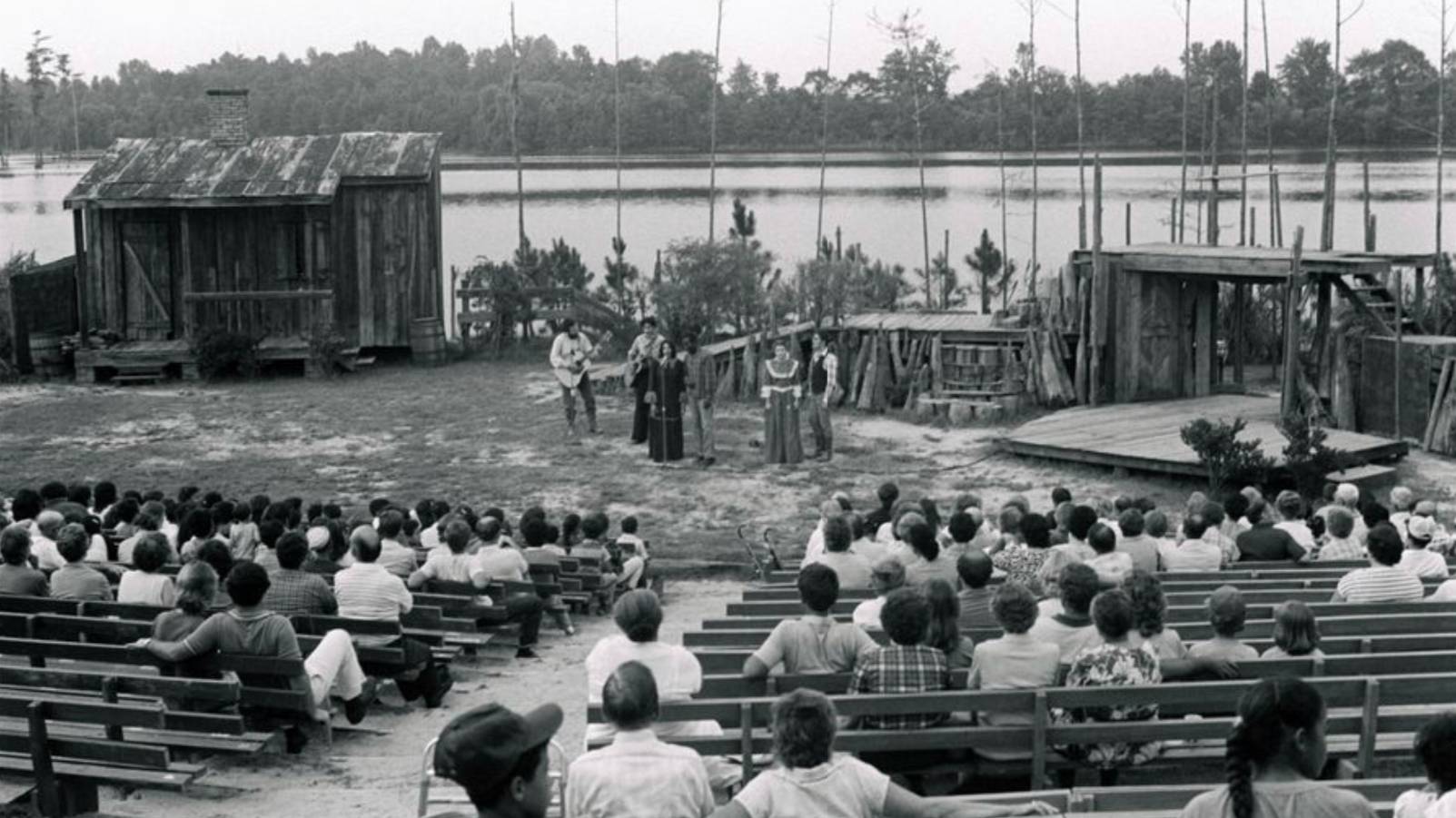
Presented by UNCP’s Theatre program in partnership with the Lumbee Tribe, Strike at the Wind! will be performed July 4, July 10-11, and July 17-18 at 8 p.m. at the Adolph Dial Amphitheater at the Lumbee Tribe Cultural Center.
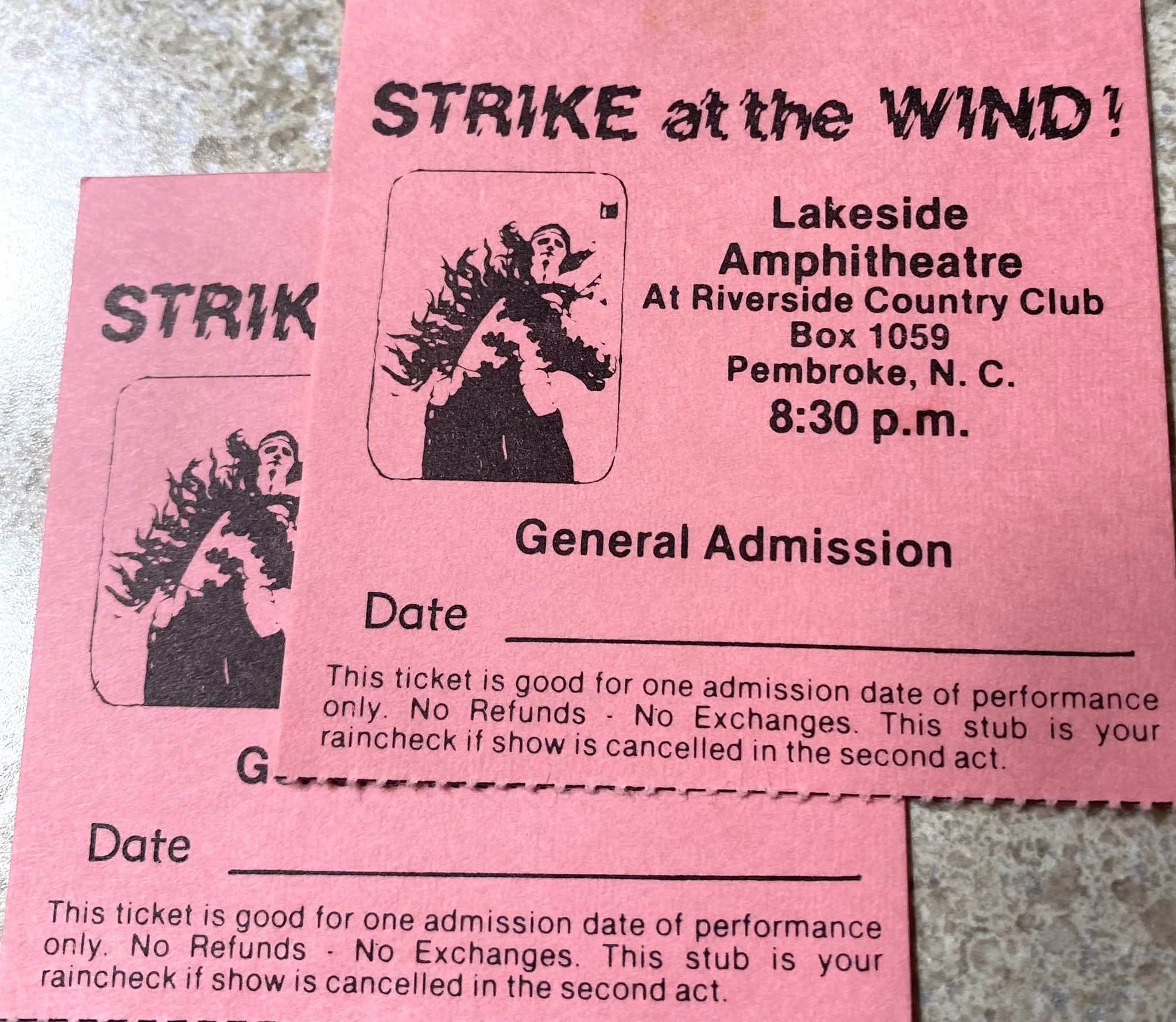
Tickets are $10 and may be purchased online at uncp.edu/gpac or by calling 910.521.6361 . Tickets may also be purchased at the gate.
Originally premiering in 1976, Strike at the Wind! tells the story of Lumbee folk hero Henry Berry Lowrie and the Lowrie War, a series of conflicts that erupted in Robeson County during and after the Civil War. Over five decades, the production has grown beyond outdoor theater to become a living expression of Lumbee history, identity and resilience.
Dr. Jonathan Drahos, UNCP Theatre program director, who brought Strike at the Wind! back to the stage in 2017 after a decade-long hiatus and serves as director of the production, said this year’s performances carry special significance.
“Henry’s struggle is very similar to the tribe’s political struggle for federal recognition,” Drahos said. “What Henry fought for was the dignity of people, recognizing people for who they are and granting power to those who previously had been unheard or marginalized.”
A Story That Refused to Fade
Although Strike at the Wind! premiered in 1976, its roots reach back much further.
In 1940, Yankton Sioux anthropologist and playwright Ella Deloria traveled to Pembroke to create The Life-Story of a People , a historical pageant performed at what was then Pembroke State College. Drawing on Lumbee history and community participation, the production traced the story of the Indians of Robeson County, including the rise of Henry Berry Lowrie. Though World War II brought the pageant to an end, the idea of telling the Lumbee story through live theater endured.
Inspired by Deloria’s work and encouraged by Pulitzer Prize-winning playwright Paul Green, Lumbee educator Dr. Adolph Dial and community leaders, including Hector McLean, later formed the Robeson Historical Drama Association and commissioned playwright Randolph Umberger — one of Green’s former students — to write a new outdoor drama centered on Lowrie.
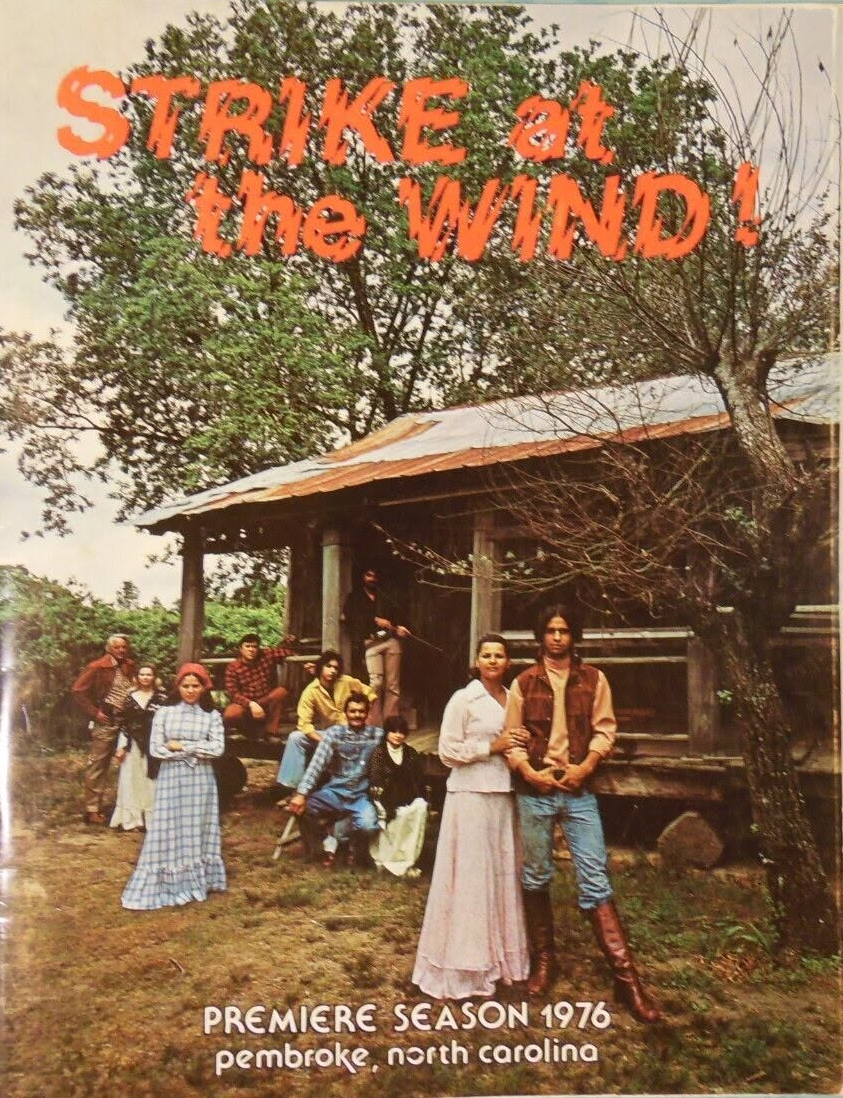
On July 1, 1976, more than 850 people attended the premiere at the Lakeside Amphitheater. By season’s end, more than 17,000 people had seen the production, making it the nation’s most successful new outdoor drama of the year, according to the Institute of Outdoor Drama.
Former Lumbee Tribal Chairman Harvey Godwin, who portrayed Lowrie from 1984 to 1990, said preparing for the role meant immersing himself in the history of the Lumbee Tribe.
“I spoke with Dr. Adolph Dial, interviewed elders, listened to stories from my grandfather John Godwin, went through newspapers and researched Henry Berry Lowrie,” Godwin said. “Then I had to use my imagination to understand Henry’s mission and what he was trying to accomplish.”
“Everything about the Lumbee Tribe begins with Henry Berry Lowrie,” Godwin said. “He stood up and fought against a hostile system in the county. He was the first one to do it.”
Godwin believes audiences connected immediately with the production because it offered something Robeson County had never experienced.
“Strike at the Wind! was powerful and raw,” he said. “People in our area back then hadn’t seen that kind of theater before — the guns going off, the torches. The script itself was real. The language was real. It got people’s attention.”
While Henry Berry Lowrie remains the central figure, Godwin believes the story’s lasting power lies in its core message.
“Resilience is the key,” he said. “It wasn’t just Henry and his gang. It was all three races working together for a common cause because they were all oppressed.”
David Oxendine witnessed the production’s evolution firsthand.
A longtime UNC Pembroke professor, Oxendine first appeared in the drama as a cast member in 1977 and 1978 before returning in 1984 to direct the production at the request of Dr. Dial. Over the next two decades, he directed the drama for 15 seasons.
While studying Umberger’s script, Oxendine recognized an opportunity to deepen the historical context by incorporating the effects of North Carolina’s 1835 constitutional changes that stripped voting rights from free people of color and reshaped the status of American Indians.
“It really became more of the real history of the Indians here at the time,” he said.
Looking back, Oxendine believes the production’s enduring relevance lies in the historical moment it depicts.
“The connection to that history — that Henry was one of the first to resist what was happening during the Confederacy — is a great story,” Oxendine said.
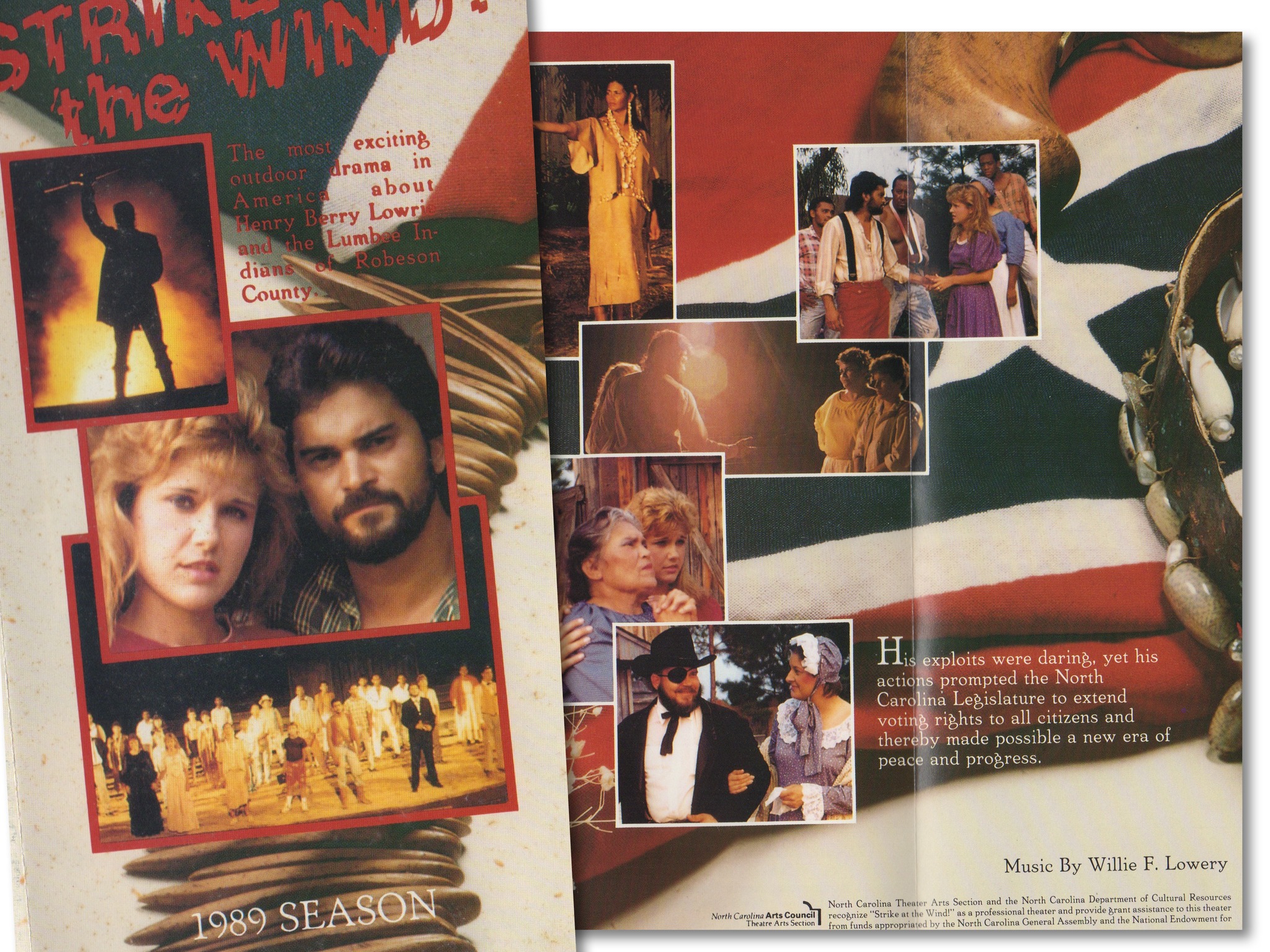
For Dr. Malinda Maynor Lowery, a nationally recognized Lumbee historian, award-winning author and the widow of composer Willie Lowery, Strike at the Wind! occupies a singular place in Lumbee culture.
Although Umberger wrote the script, she said the production emerged from generations of community memory.
“The team of people who came together were recalling memories of these events that had been passed down from generation to generation,” she said. “The story is as native to us as any other aspect of our culture — the way we talk, our food, our singing and the way we come together at Lumbee Homecoming.”
Lowery credits the production’s longevity to the unique relationship between story, place and community.
“Strike at the Wind! has stayed around so long because of the synergy between the people who participate, the story that is told and the place where it occurred,” she said.
That connection also extends to the music composed by her late husband.
“He was all about dramatics and tension,” she said. “The music helped move the story forward and helped the audience identify with what was happening on stage. It might communicate love, longing, hope or loss, but it always connected people emotionally to the story.”
Even today, hearing the opening notes brings back powerful emotions.
“I get chills every time I hear the opening. The drumbeats... it’s that intuitive sense of being called together. There is nothing more powerful than the togetherness of our people.”
Preserving the Legacy
Fifty years after its premiere, Strike at the Wind! continues to thrive because each generation has found new ways to carry its story forward. UNC Pembroke has remained at the center of that effort, from premiering the production in 1976 to educating generations of performers, directors and scholars who have shaped its evolution.
The 2026 cast is the largest in recent memory, with 35 performers, roughly half of whom are current UNC Pembroke students or alumni.
“It allows our students to recognize that they are part of a broader community of people, and that part of their education is learning how to be in service to their community as artists,” Drahos said.
Earlier this year, UNCP further strengthened that commitment by acquiring the original Strike at the Wind! script and composer Willie Lowery’s original musical score. Now preserved in the university’s Special Collections and the Museum of the Southeast American Indian, the materials safeguard two of the production’s most significant artistic artifacts while supporting future scholarship, performances and community engagement.
“Strike at the Wind! tells the story of a pivotal time in our region and this production reminds us of how much progress has been made in our society and our community while preserving an important part of our shared history,” said UNCP Chancellor Robin Gary Cummings. “We’re proud that through a strong partnership between UNCP and the Lumbee Tribe, we continue to introduce new audiences to a story that remains as meaningful today as it was 50 years ago.
“Performed beneath the open sky at the newly renovated Adolph Dial Amphitheater overlooking the 100-acre Cypress Lake, this production is an experience not soon to be forgotten,” he said.
Tickets for the 50th anniversary season are available via etix.com or by calling 910.521.6361 .