National Tribal Leaders Convene at UNC Pembroke
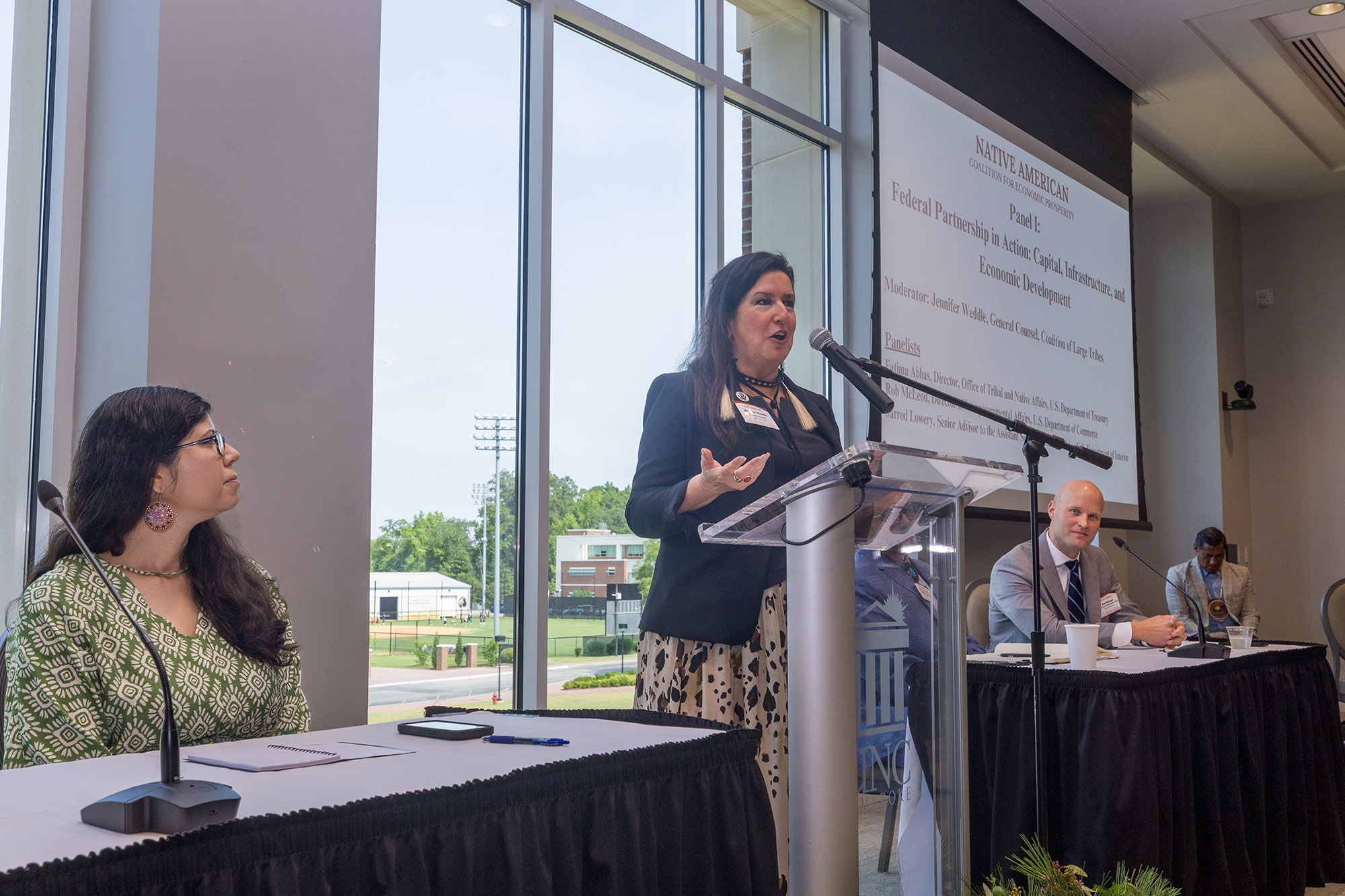
At a time of new opportunity for tribal nations, leaders representing more than 20 Native communities from across the country gathered at UNC Pembroke on Tuesday to discuss the challenges and opportunities shaping their future.
The fifth convening of the Native American Coalition for Economic Prosperity's (NACEP) Government-to-Government Roundtable Series brought tribal leaders, federal officials and development professionals to campus for discussions focused on workforce development, access to capital and strengthening tribal economies, while also exploring emerging opportunities in areas such as artificial intelligence, infrastructure and federal partnerships.
Founded by Tunica-Biloxi Tribe of Louisiana Chairman Marshall Pierite, NACEP serves as a national coalition of tribal nations working together to advance economic opportunity and self-determination.
“For too long, Indian Country has been told to wait,” Pierite said during opening remarks. “Wait for opportunity. Wait for investment. Wait for infrastructure. Wait for policy to catch up. Wait for others to decide what is best for our communities. But tribal nations have never been passive observers in our own future.
“Today, we are here to say that our future is not something we are waiting for. Our future is something we are building right now,” Pierite said.
The daylong event featured panel discussions with representatives from the U.S. Departments of Treasury, Commerce and Interior, as well as experts in economic development, law, workforce development and emerging technologies. Discussions centered on federal resources available to tribes, economic sovereignty, workforce development and strategies for creating long-term prosperity in Native communities.
Chancellor Robin Gary Cummings said hosting the gathering at North Carolina's historic American Indian university reinforces UNCP's unique role as a place where conversations about the future of tribal nations can take shape.
“For nearly 140 years, UNC Pembroke has served generations through education, so it is only fitting that leaders from across Indian Country gathered here to discuss the opportunities and challenges that will shape the next generation,” Cummings said. “These conversations are important not only for tribal nations, but for the future of economic development, workforce preparation and community prosperity across our country.”
Fatima Abbas, director of the Office of Tribal and Native Affairs at the U.S. Department of Treasury, was among Tuesday's panelists. She said gatherings like these are critical to supporting the government-to-government relationship with tribes.
“Hearing directly from tribes about their priorities is valuable to shaping federal policy that is responsive,” Abbas said. “For example, NACEP tribes have been strong advocates of tax guidance from Treasury on tribal tax matters. These rules recognize tribal sovereignty and illustrate the importance of hearing from Tribal leaders and their partners.”
As an enrolled citizen of the Haliwa-Saponi Tribe in Hollister, North Carolina, Abbas said the NACEP convening marked her first visit to Pembroke.
“I was impressed that a tribal-serving institution has such an extensive footprint in tribal and non-tribal North Carolina,” Abbas said. “UNC Pembroke demonstrates traditional tribal values, but not only is UNCP educating tribal citizens, it is also raising the socio-economic status of all within the region and making Robeson County a place where folks want to return to, grow, and that can attract outside investment based on community-driven needs.”
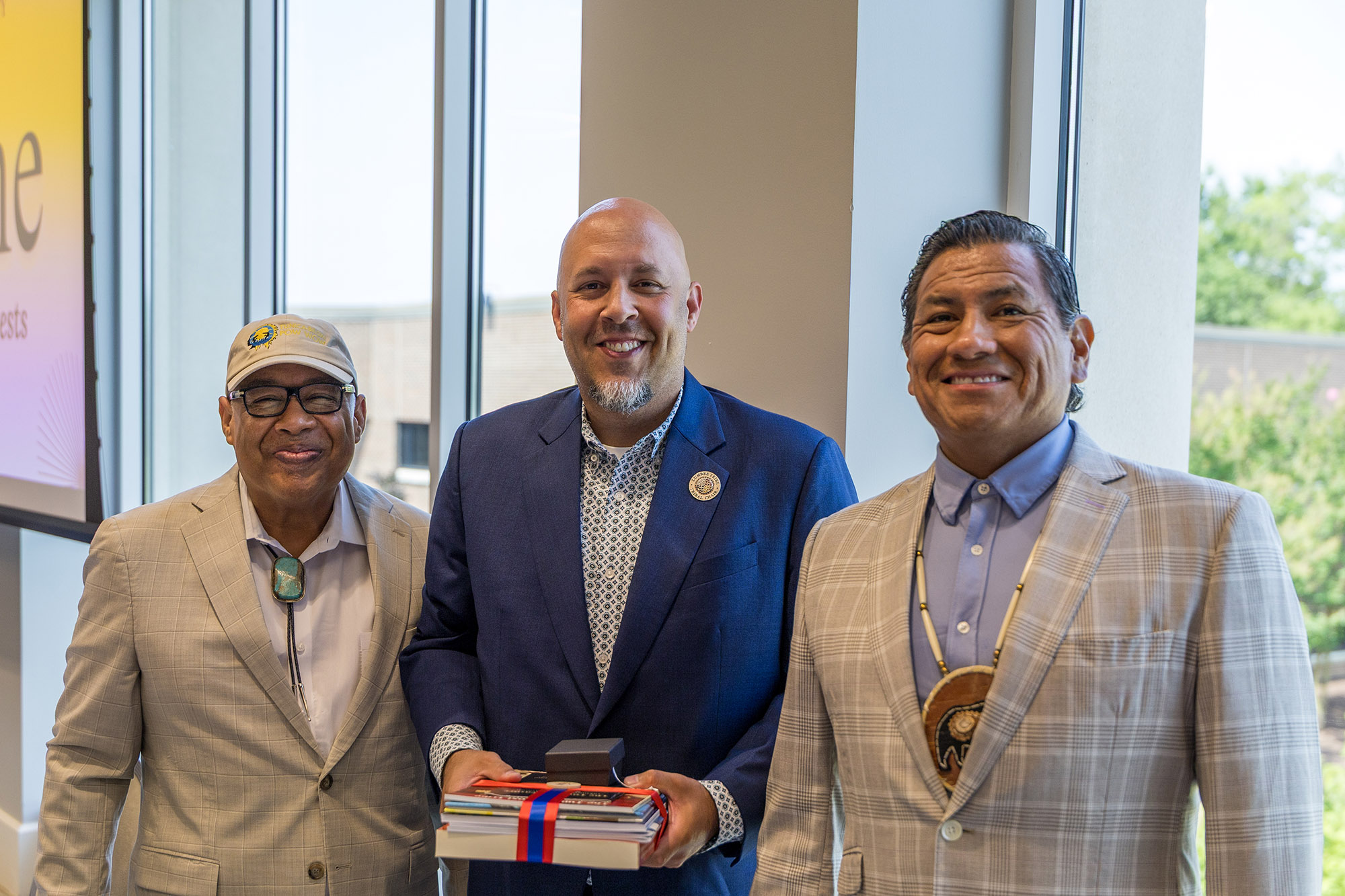
Lumbee Tribal Chairman and UNC Pembroke alumnus, John Lowery, serves on NACEP's leadership council. He said hosting the gathering at UNCP carried special significance for both the tribe and the university.
“I was excited to have tribal leaders from all over the country here on our campus and in Pembroke,” Lowery said. “I think it underscores what full federal recognition means for the Lumbee Tribe. We are now able to bring tribal leaders and representatives from federal agencies together to discuss economic development, access to capital and opportunities that will help strengthen our communities.”
Lowery said federal recognition has already created new opportunities for the Lumbee Tribe to engage directly with federal agencies and learn about resources that support economic growth and community development.
“There are so many tools now that we as Lumbee had not had access to,” he said. “We can now sit in these rooms, learn and participate in these important conversations.”
Megan Guillot, chief of staff to Chairman Pierite, said one of the coalition's primary goals is bringing tribal nations, federal agencies and private-sector partners together to build meaningful relationships.
“The panelists and moderators brought a lot of knowledge about opportunities available through the federal government and through the industries they represent,” Guillot said. “Bringing those voices together creates opportunities for collaboration that can benefit tribal communities across the country.”
Convening attendees gathered Monday evening with a welcome reception and tour of the Museum of the Southeast American Indian led by Executive Director Nancy Chavis. Through exhibits and firsthand stories about the history of the Lumbee Tribe and UNC Pembroke, tribal leaders and federal representatives gained a deeper understanding of the university's origins and its enduring connection to Native communities in southeastern North Carolina.